DOE approves safety analysis for Last Energy's PWR-5 pilot at Texas A&M
The pilot now enters a readiness review, the last step before authorization for criticality, after a preliminary safety analysis cleared in May 2026.
Key facts
- Selected August 2025 for the DOE Reactor Pilot Program, launched under a 2025 executive order
- Pilot uses the same full-scale reactor core as Last Energy's commercial 20 MWe PWR-20
- Last Energy and Texas A&M announced the RELLIS microreactor project on October 15, 2025
- DOE authorizes demonstration reactors; commercial plant licensing remains with the NRC
- Last Energy is also in licensing for four PWR-20 modules at its Llynfi project in South Wales
The US Department of Energy said on October 8 that it approved the Documented Safety Analysis for Last Energy's planned pilot reactor at Texas A&M-RELLIS, clearing the project to move into the readiness review, the final step before authorization for criticality and reactor operations.
The Documented Safety Analysis, or DSA, is the last and most comprehensive safety analysis in the DOE authorization process, documenting in detail how the reactor and facility will be operated safely. It builds on the Preliminary Documented Safety Analysis, approved in May 2026.
Last Energy was selected in August 2025 for the DOE Reactor Pilot Program, launched earlier that year to accelerate reactor demonstration by authorizing test reactors through the DOE's licensing process. The program is part of the Reforming Nuclear Reactor Testing at the Department of Energy executive order signed by President Donald Trump in 2025. Licensing for commercial nuclear plants remains the responsibility of the NRC.
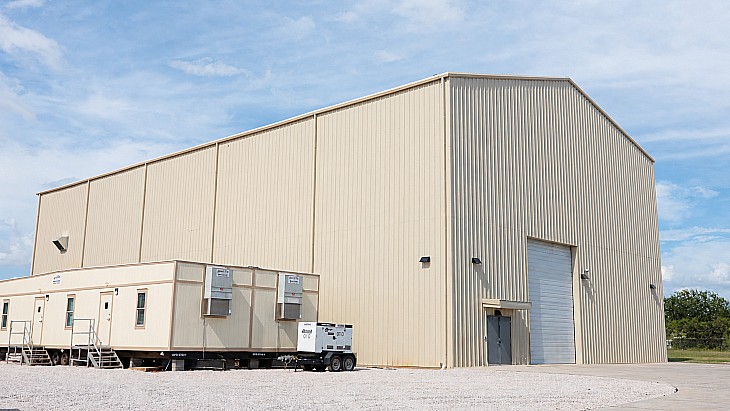
On October 15, 2025, Last Energy and the Texas A&M University System announced plans for the microreactor pilot at Texas A&M-RELLIS, an applied research and advanced technology campus in Bryan, Texas.
The PWR-5 pilot will use the same full-scale reactor core as Last Energy's commercial PWR-20, a 20 MWe micro-modular plant designed for factory fabrication, standard road transport and 24/7 baseload power delivery to industrial customers and data centers. It uses off-the-shelf low-enriched uranium fuel and sits in a 1,000-tonne, hermetically sealed steel structure designed for no-access operation. Last Energy is also in the licensing process for a plant with four PWR-20 modules at Prosiect Egni Glan Llynfi in South Wales.