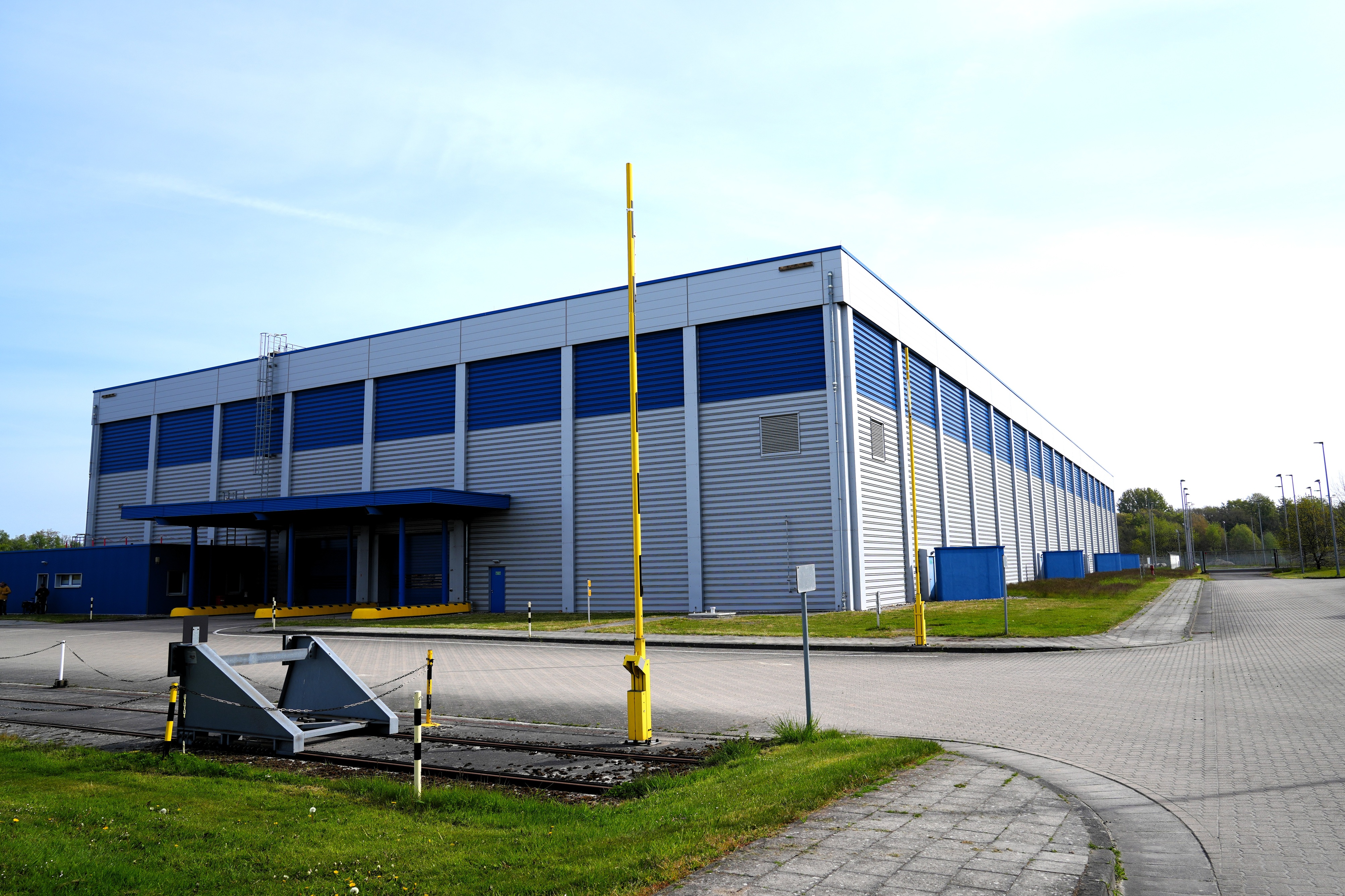
Urenco Deutschland commissions Gronau uranium oxide storage facility
The facility operates under a plant expansion license granted in 2005 by North Rhine-Westphalia's nuclear licensing authority.
Key facts
- Depleted uranium, or tails, from enrichment will be shipped to Pierrelatte, France, and Capenhurst, UK
- UF6 converted to U3O8 at those sites, then returned to Gronau for long-term storage
- U3O8 is insoluble in water, non-combustible and non-volatile at elevated temperatures
- Depleted uranium still contains a significant share of uranium-235, per a 2002 safety report
- Financial provisions maintained for possible future recycling, utilisation or disposal
Urenco Deutschland commissioned a storage facility for uranium oxide (U₃O₈) at its Gronau enrichment plant, the company said on October 6. The facility forms part of the plant's expansion licence, granted in 2005 by the nuclear licensing authority of North Rhine-Westphalia.
The building was constructed several years ago under that licence. Its commissioning completes the legal and operational requirements for storing the material.
Over the coming years, Urenco said, depleted uranium from Gronau — the by-product of enrichment, known as tails, held in uranium hexafluoride (UF₆) form — will be transported to Pierrelatte in France and to Capenhurst in the United Kingdom for chemical conversion into U₃O₈. The oxide can then be returned to Gronau for long-term storage. U₃O₈ is insoluble in water, non-combustible, chemically stable and non-volatile at elevated temperatures.
Under current legislation, depleted uranium is classified as a potentially reusable material resource. A safety report prepared in 2002 for the final expansion stage of the enrichment plant noted that the material still contains uranium-235. No specific reuse pathway is currently envisaged, Managing Director Jörg Harren said, and financial provisions are maintained for possible future recycling, utilisation or disposal.
