India permits first approach to criticality at 700 MWe Rajasthan unit
Kaiga unit 1 reached criticality after a 600-day refurbishment that included replacing coolant channels and feeders.
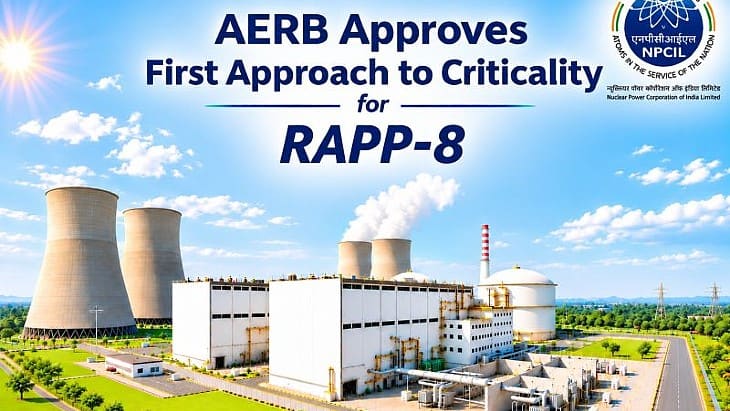
Key facts
- Atomic Energy Regulatory Board permission for the First Approach to Criticality came November 19 after safety reviews
- RAPP 8 is the second of two Indian-designed 700 MWe pressurized heavy water reactors at the Rajasthan project
- Kaiga 1 reached criticality November 22 after a 600-day outage, per Nuclear Power Corporation of India
India’s Atomic Energy Regulatory Board (AERB) granted Nuclear Power Corporation of India Ltd (NPCIL) permission for the First Approach to Criticality at Rajasthan Atomic Power Project unit 8 on November 19, following safety reviews of its design, construction, commissioning tests and operational preparedness.
The 700 MWe pressurized heavy water reactor is the second of a pair at the site and the fourth in a series of 16 such units being set up in India. The permission allows commissioning to proceed; commercial electricity generation remains subject to satisfactory completion of prescribed tests and further regulatory permissions.
Separately, NPCIL said Kaiga unit 1 reached criticality on November 22 after 600 days of refurbishment. The 200 MWe reactor had been shut down on April 1, 2025, for replacement of its coolant channels and feeders. The work included defuelling, inspections, installation of new channels, testing and reloading. NPCIL called the time to criticality a fleet-wide benchmark.

 2 sources
More on NPCIL