Zaporizhzhya plant loses its sole remaining 330-kilovolt power line
The IAEA is seeking a ninth localized ceasefire as two emergency diesel generators operate and fuel is estimated to last more than ten days.
Key facts
- Offsite power lost on November 25 at 05:28 local time, reportedly due to military activity
- Two of the plant’s 19 available emergency diesel generators are operating
- The IAEA estimates current diesel fuel will last more than ten days
- Reactor heat removal pumps are shut down; spent fuel pool cooling pumps run on Units 1 and 6
- The Dniprovska 750-kilovolt line and substation have also sustained damage
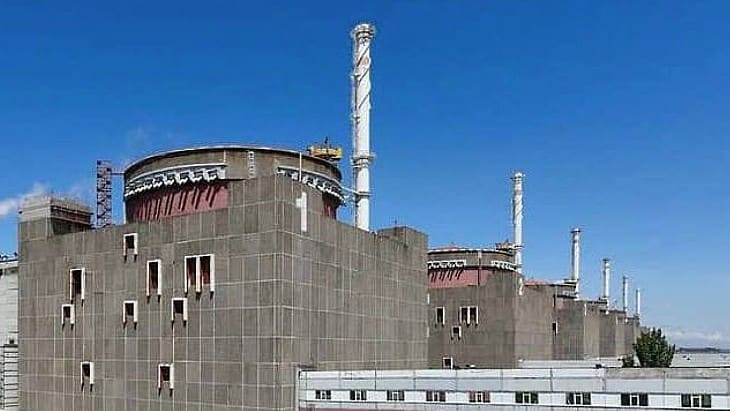
The Zaporizhzhya Nuclear Power Plant (ZNPP) lost its connection to its sole remaining external power line on November 25, and is again relying on emergency diesel generators for essential safety and security functions. The International Atomic Energy Agency (IAEA) is working with Russia and Ukraine to arrange a ninth localized ceasefire, which would facilitate repairs to the line.
The 330-kilovolt Ferosplavna-1 line went out at 05:28 local time, reportedly because of military activity. The IAEA said this was the 28th time during the conflict that the plant had relied on emergency diesel generators.
Fuel conservation has reduced equipment use
Four generators started automatically when the power line failed. Two were later shut down to conserve fuel, leaving two operating out of 19 available generators. The plant has also suspended on-site heating, with temperatures at the site falling as low as 0°C during the week.
The IAEA estimates that diesel fuel will support the current configuration of two operating generators for more than ten days. It is seeking further information to assess fuel stocks independently, after receiving varying information in recent months about the fuel’s availability and location.
The plant has shut down all reactor heat removal pumps and is operating only the spent fuel pool cooling pumps on Units 1 and 6. Coolant temperatures remain within normal operational limits but are rising, so the pumps will need to be restarted periodically to keep temperatures within safe limits.
A second power route also needs repairs
The IAEA is also seeking negotiations to enable repairs to the Dniprovska 750-kilovolt power line and its associated substation, which are essential parts of the plant’s energy infrastructure. The substation was reportedly damaged during military activity in May. The line was repaired under the sixth IAEA-negotiated temporary localized ceasefire in June, but further damage was later identified.
Other nuclear sites reported alerts and power fluctuations
The IAEA team at the ZNPP reported hearing military activity every day during the week. The plant also alleged attacks on civilian vehicles at the site. Elsewhere in Ukraine, nuclear power plants reported fluctuations in output as grid instability linked to military activity affected multiple external power lines.
Over the past week, a total of 143 air raid alerts occurred. At sites where IAEA staff are present, drones were reported at the Khmelnytskyy plant, the South Ukraine plant and the Chornobyl plant: 10, 26 and 91, respectively. One drone at the South Ukraine plant reportedly passed directly over it. Drones were also reported as close as 100 meters to the Centralised Spent Fuel Storage Facility in the Chornobyl Exclusion Zone.
Under its assistance program for Ukraine, the IAEA also arranged deliveries of dose rate meters and a hot water tank to the National Research Center for Radiation Medicine; air handling units and air conditioners to the Chornobyl plant; and filtering polymeric fibrous material to the Ukrainian Hydrometeorological Center and related State Emergency Service of Ukraine organizations. Japan funded the deliveries.

 2 sources
More on International Atomic Energy Agency · Zaporizhzhya · Zaporizhzhya Nuclear Power Plant