Idaho National Laboratory selects Guidedwave for full-scale canister demo
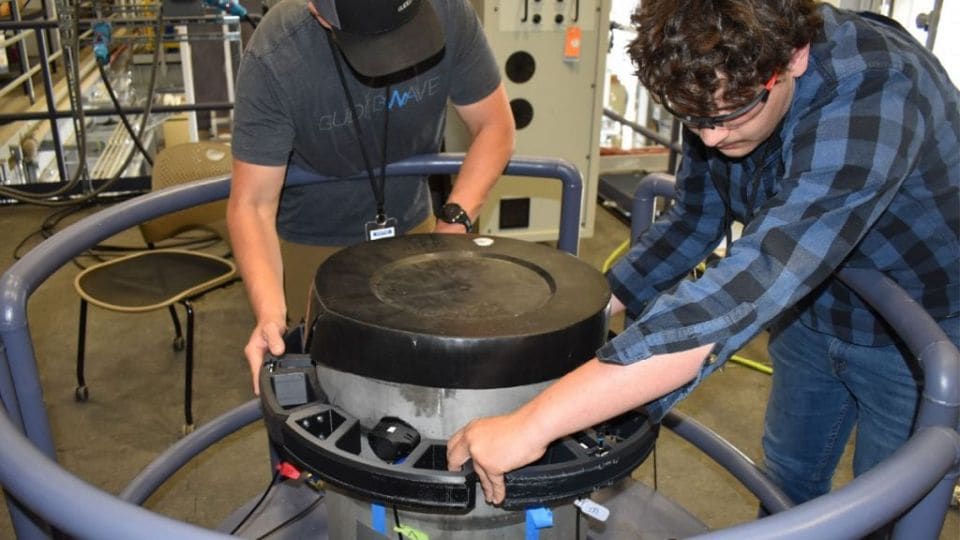
The roughly yearlong test will use an empty, heated Holtec UMAX canister at San Onofre starting in February 2027.
Key facts
- Full-scale demonstration planned for February 2027 at San Onofre Nuclear Generating Station
- Test canister will contain no used nuclear fuel and will use electric heaters to simulate operating conditions
- Acoustic emission monitoring is not required by the U.S. Nuclear Regulatory Commission
- A panel of Department of Energy and industry experts selected Guidedwave after pre-demonstration testing
The Center for Used Fuel Research at Idaho National Laboratory selected Guidedwave for a full-scale demonstration of automated acoustic emission monitoring on a simulated used nuclear fuel canister. The laboratory said November 23 that the roughly yearlong test is scheduled to start in February 2027 at San Onofre Nuclear Generating Station in Southern California.
The demonstration will test whether the technology can provide continuous, remote information on a canister’s structural health. It is a proof of concept for possible use at future federal storage or staging facilities, which could hold hundreds or thousands of dry storage systems.
Acoustic emission sensors detect sound from developing defects
The demonstration will use acoustic emission sensors, not guided-wave testing. Acoustic emission monitoring detects sound produced when a defect such as a crack develops or energy is suddenly released; sensors can monitor those signals remotely.
Guidedwave advanced after testing at the laboratory’s Remote Work Mockup and Prototype Lab. A panel of Department of Energy and industry experts selected the company for its potential to enable continuous remote monitoring and reduce or eliminate repeated deployment of inspection equipment on some canisters.
Guidedwave and Sensible Voltaics were the final contenders in June, and both submitted systems for pre-demonstration testing, according to the account of the selection. The documents do not identify the other award winners from which the finalists were drawn.
The test canister will be empty and electrically heated
The demonstration will use a Holtec UMAX dry storage test canister without used nuclear fuel. Electric heaters will simulate relevant heat loads and environmental conditions. The test is planned to last approximately one year.
The monitoring approach addresses the demands of aging management. U.S. Nuclear Regulatory Commission regulations require licensees to maintain aging management programs for used nuclear fuel storage systems. Current inspections at nuclear plant sites take place periodically and require specialized equipment to be deployed for each inspection cycle. Automated monitoring could reduce operational burdens at a future federal facility with many canisters.
The demonstration does not change current requirements. The Nuclear Regulatory Commission does not require passive canister monitoring to meet used-fuel storage safety regulations. Nuclear plant operators could choose to adopt the technology if the demonstration succeeds and they revise their aging management plans. The documents give no cost for the demonstration.

 2 sources
More on Idaho National Laboratory